

How to Read an Acrylic Sheet Specification: A B2B Buyer Guide
An acrylic sheet specification should tell a buyer much more than 1220 × 2440 × 3 mm. Before ordering, confirm the production process, usable sheet size, nominal and actual thickness, tolerance, raw-material requirement, surface quality, cutting allowance, protective film and packing.
For B2B purchasing, the most important rule is simple: never assume that two sheets with the same nominal size and thickness are actually the same specification.
Quick Answer: What Should an Acrylic Sheet Specification Include?
- Cast or extruded acrylic
- Gross sheet size or net usable size
- Whether cast-sheet dimensions include the gasket edge
- Nominal thickness and agreed actual thickness range
- Thickness tolerance
- Raw-material requirement
- Color, transparency and surface finish
- Cosmetic defect requirement
- Protective film
- Cutting or fabrication requirement
- Finished net size where further processing is required

1. Start With the Manufacturing Process: Cast or Extruded?
Before reading dimensions, identify how the acrylic sheet is manufactured. The two main processes are cast acrylic and extruded acrylic. The production method affects thickness tolerance, available sheet format, edge condition, usable area, fabrication behavior and price.
2. Extruded Acrylic Sheet Dimensions Are Usually More Straightforward
Extruded acrylic is produced continuously. PMMA is formed into sheet and then cut to the required width and length. Because the process does not use the gasketed casting cell found in cell-cast production, the supplied dimensions normally refer to the cut sheet itself.
For example, a 1220 × 2440 mm extruded acrylic sheet will normally be supplied around that usable cut size, subject to the manufacturer’s stated cutting tolerance.
Buyers should still confirm whether 1220 × 2440 mm is the actual delivered size, what length and width tolerance applies, and whether further trimming is required.
Learn more about our extruded acrylic sheets for consistent-thickness sheet supply and fabrication applications.

3. Cast Acrylic Sheet Dimensions Need More Attention
Cell-cast acrylic is made by polymerizing liquid MMA between glass plates. A gasket or sealing strip is used around the casting cell to create the required gap and seal the mold during production.
This creates an important purchasing question: does the supplier’s size refer to the casting mold, the untrimmed mother sheet, or the finished net usable sheet? These dimensions are not always identical.
4. Ask for the Supplier’s Cast Acrylic Mold Size Table
When purchasing cast acrylic, especially in large quantities, unusual formats or thick sheets, ask the manufacturer for its mold size / sheet size table.
Gross or Mold Size
The original production dimension associated with the casting cell or untrimmed sheet.
Net Usable Size
The usable rectangular area after the casting perimeter or non-usable edge has been removed.
This difference directly affects cutting yield, nesting, loss calculation and the number of finished parts that can be produced from one sheet.

5. Why the Gasket Edge Matters
In cell-cast production, the perimeter associated with the casting gasket is generally not treated as the final usable area. The exact edge allowance depends on the mold system, production method, sheet thickness and trimming specification.
As acrylic thickness increases, the casting gap and gasket arrangement may also change. For thick sheets, the difference between gross dimensions and usable dimensions can become more important.
Instead of asking only “What mold size do you have?”, ask: What is the actual usable sheet size after the casting edge is removed?
For more background on the casting process, see how cast acrylic sheets are made.
6. The Simplest Solution: Order a Net Trimmed Size
For many distributors and fabricators, the easiest specification is a finished trimmed sheet. For example: Net sheet size: 1220 × 2440 mm.
This means the customer receives a usable rectangular sheet at the agreed dimensions after edge trimming rather than a sheet whose quoted size still includes a casting perimeter. Length and width tolerance should still be confirmed.
7. Thickness Is One of the Most Important Commercial Specifications
Supplier A and Supplier B may both quote 3 mm acrylic sheet, but the actual products may not be equivalent. One may be produced close to nominal thickness while another may be supplied as a commercial negative-tolerance grade.

8. Nominal Thickness Is Not Always Actual Thickness
A label such as 3 mm is a nominal description. It does not automatically guarantee 3.00 mm at every measurement point. This is particularly important for cast acrylic, which generally has greater thickness variation than extruded sheet.
A professional purchase specification should state nominal thickness + agreed actual thickness range.
9. Full-Thickness Acrylic Sheet
In B2B trading, buyers may use terms such as full thickness or actual thickness for sheet required to remain close to nominal thickness.
For example, a buyer may request nominal 3.0 mm with an agreed actual range of 2.9–3.1 mm if that range has been confirmed as achievable for the selected material and production process.
This can be useful for precision equipment panels, CNC components, fitted assemblies, export projects and premium display products.
Important: ±0.1 mm should not be treated as a universal cast-acrylic industry tolerance. The acceptable range must be agreed for the specific product, process and thickness.
10. Commercial Negative-Tolerance Acrylic
Another common commercial option is sheet supplied below nominal thickness. Examples encountered in the market may include:
| Nominal Specification | Illustrative Commercial Actual Range |
|---|---|
| 3 mm | Approximately 2.7–2.8 mm |
| 5 mm | Approximately 4.6–4.8 mm |
These are illustrative market examples, not universal standards. Different manufacturers and product grades may use different ranges.
Commercial negative-tolerance sheet can be suitable for signage, general displays, partitions, shopfitting and other applications where tight thickness control is not required. The problem is not negative tolerance itself; the problem is when the actual range is not declared before the order.
11. Why Thickness Changes the Price
Acrylic sheet cost is strongly related to material consumption. A thinner sheet uses less PMMA per square meter. Across hundreds or thousands of sheets, a small thickness difference can materially affect the quotation.
Buyers should never compare only price per sheet before confirming actual thickness.
12. Full Thickness and Negative Tolerance Can Both Be Legitimate
The correct question is not “which is better?” but which specification does the application require?
A precision component may need tighter control because it must fit CNC grooves, brackets or equipment structures. A general advertising panel may work perfectly with a commercial negative-tolerance specification if the buyer knows and accepts the actual range.
If you are still deciding which nominal thickness is appropriate for your application, see how to choose the right acrylic sheet thickness.
13. Cast and Extruded Thickness Tolerance Should Not Be Treated the Same
Extruded acrylic normally offers tighter gauge consistency than cell-cast acrylic. Cast acrylic has other advantages, but its thickness behavior should be evaluated according to its own process and specification.
14. Measure Thickness at More Than One Point
For bulk-order approval, one measurement is not enough. A practical check can include the four corners and center, with additional points where required. This helps identify edge variation, center variation and localized thin areas.
15. Understand Three Different Meanings of “Size”
- Mother sheet size
- Cutting size
- Finished net size
These dimensions are related, but they are not the same measurement.
16. Mother Sheet Size
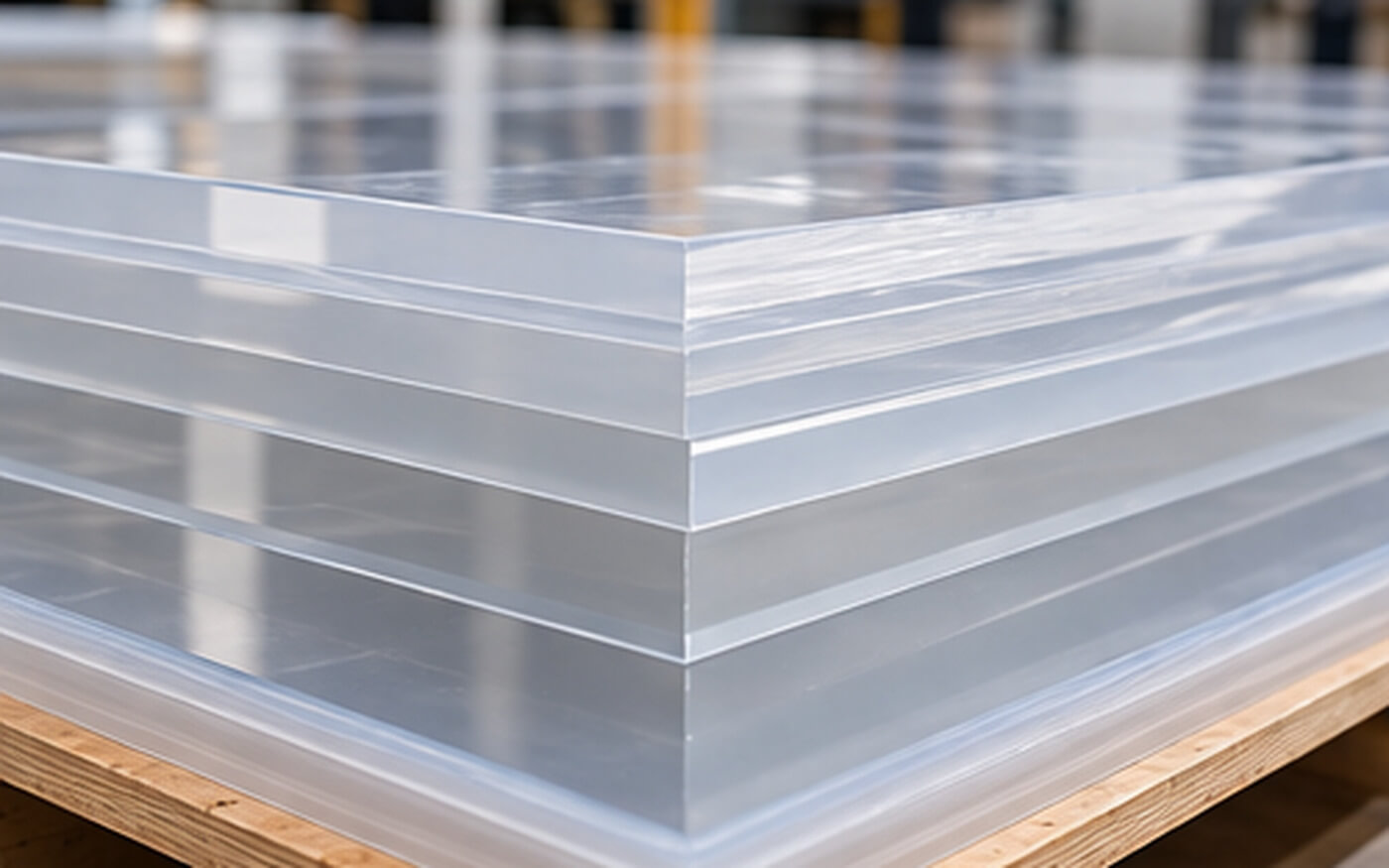
The mother sheet is the full sheet supplied by the acrylic manufacturer. Typical formats may include 1220 × 2440 mm, 1250 × 2500 mm, 2000 × 3000 mm and other mold or project sizes.
For distributors, mother-sheet dimensions affect inventory, cutting layouts, usable yield and material cost. For cast acrylic, always confirm whether the stated mother-sheet size is gross or net.
For buyers sourcing standard full-sheet formats, see our 4×8 acrylic sheet options and ordering information.
17. Cutting Size
The cutting size is the blank or panel dimension prepared before final finishing. If the final part must be 600 × 400 mm, the initial cutting dimension may need additional allowance for saw kerf, CNC finishing, edge milling or polishing.
18. Saw Kerf Is Part of Material Cost
Every saw cut removes material. In many acrylic workshops, a planning allowance around 0.3–0.5 mm per saw cut may be encountered with certain blades and setups.
This is not a universal figure. Actual kerf depends on blade thickness, machine, material thickness and required finish.
19. Nesting Determines Your Real Yield
A mother sheet may appear large enough for a certain number of parts, but after kerf, edge allowance, polishing allowance and defect avoidance are included, the real yield can be lower.
Professional distributors and fabricators therefore calculate yield per mother sheet, not only price per mother sheet.
20. Finished Net Size
The finished net size is what the customer ultimately receives after sawing, CNC machining, edge milling, polishing, drilling or other finishing operations.
If a drawing states 600 × 400 mm finished, the fabricator should know whether dimensional tolerance applies before or after final edge finishing.
For cut-to-size panels and further processing, explore our custom acrylic fabrication capabilities.
21. One Simple Example
Suppose a distributor receives: Clear cast acrylic / 5 mm / 1220 × 2440 mm. The specification is still incomplete.
Material
- Cast PMMA?
- Virgin, recycled-content or blend requirement?
- Specified raw-material grade if required?
Sheet Dimensions
- Gross size or net trimmed size?
- Does the stated size include the casting edge?
- What is the actual delivered dimension?
Thickness
- Nominal 5 mm?
- Full-thickness requirement?
- What actual thickness range is acceptable?
Appearance
- Surface grade?
- Black spots, bubbles, particles and scratches?
Protection
- PE protective film?
- One side or both sides?
Only after these points are defined does “5 × 1220 × 2440 mm” become a meaningful B2B specification.
For more detail on raw-material selection, read virgin MMA vs recycled acrylic.

22. Surface Quality Should Be Part of the Specification
Two acrylic sheets can have identical dimensions but very different visual quality. For clear acrylic, the purchase specification may need to cover scratches, hairlines, bubbles, black spots, white particles, contamination, haze, gloss and edge defects.
23. Mold Condition Can Affect Cast Acrylic Surface Quality
For cell-cast acrylic, mold preparation is part of the manufacturing process. Mold cleanliness and condition can influence surface smoothness, gloss, marks and optical appearance. High-quality raw material alone cannot compensate for poor process control.
24. Black Spots, Particles and Inclusions Need an Acceptance Standard
A common dispute in bulk orders is whether a small black spot, particle or bubble is acceptable. The answer depends on the agreed quality level and application. Define the intended use before production.
See how acrylic sheet quality is inspected before shipment for a closer look at surface, thickness, edge and batch inspection.
25. Color Is More Than a Color Number
For colored acrylic, confirm color reference, transparent/translucent/opaque condition, batch consistency, surface finish and approved sample. For larger projects, retain an approved sample as the visual reference for bulk production.
26. Protective Film Is Also Part of the Specification
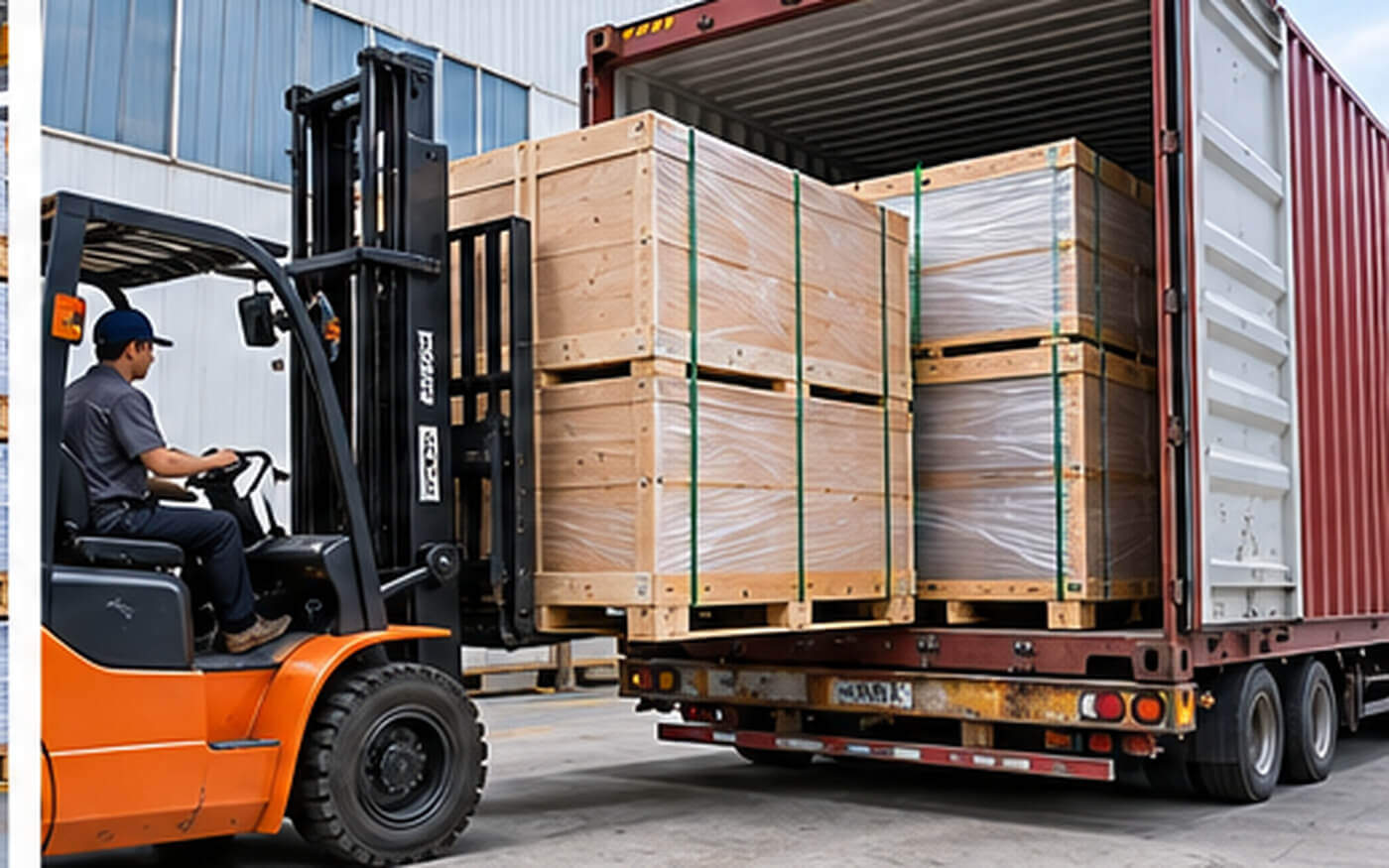
Confirm one-side or two-side protection, PE film or paper masking, film adhesion and whether the masking is suitable for later fabrication. Surface protection can materially affect the condition in which the sheet reaches the buyer.
27. Read the Specification in the Correct Order
- Production Type: cast or extruded?
- Raw Material: virgin, recycled-content or blend?
- Nominal Thickness: what is written on the quotation?
- Actual Thickness Range: what will actually be delivered?
- Sheet Dimensions: gross, mold or net trimmed?
- Surface / Color: what appearance standard applies?
- Quantity: sheets, kilograms or tons?
- Protection: what masking system?
- Packing: pallet, crate or another export method?
- Delivery Terms: EXW, FOB, CIF or another agreed Incoterm?
28. Weak vs Professional Acrylic Specification
Weak Specification
Clear acrylic
3 mm
1220 × 2440
500 sheets
Better B2B Specification
- Product: Clear cast PMMA sheet
- Nominal Thickness: 3.0 mm
- Agreed Actual Thickness: 2.9–3.1 mm
- Net Sheet Size: 1220 × 2440 mm after edge trimming
- Material: Approved virgin MMA grade
- Color: Clear
- Surface: High-gloss, visually inspected
- Protection: PE film both sides
- Quantity: 500 sheets
- Packing: Export pallet / wooden protection as agreed
- Quality: Approved sample and agreed visual standard
- Destination: Port / country
29. An Alternative Commercial Specification
- Product: Clear cast PMMA sheet
- Nominal Thickness: 3 mm commercial grade
- Agreed Actual Thickness: 2.7–2.8 mm
- Net Size: 1220 × 2440 mm
- Application: General signage
- Material Requirement: As agreed
- Protection: PE film
- Quantity: 1 container
This is not automatically a poor-quality order. It is simply a different commercial specification. Transparency is what prevents disputes.
30. Never Compare Two Quotes Until the Specifications Match
| Specification | Supplier A | Supplier B |
|---|---|---|
| Cast / Extruded | ? | ? |
| Raw Material | ? | ? |
| Nominal Thickness | 3 mm | 3 mm |
| Actual Thickness | 2.9–3.1 mm | 2.7–2.8 mm |
| Gross / Net Size | ? | ? |
| Surface Grade | ? | ? |
| Protective Film | ? | ? |
| Packing | ? | ? |
| QC | ? | ? |
A lower price does not necessarily mean the supplier is offering the same sheet at a better price. It may simply represent a different specification.
Before confirming a large-volume purchase, also review our B2B checklist for ordering acrylic sheets in bulk to verify raw material, thickness tolerance, surface quality, production capability, QC and packing requirements.
31. A Distributor Should Calculate Cost per Usable Part
For wholesalers and distributors that also offer cutting, price per sheet is not always the most useful metric. A suitable mother sheet can produce more finished parts, less scrap and fewer rejects. In real fabrication, cost per usable finished part can be more meaningful than price per mother sheet.

32. KINGSCOPE Acrylic Sheet Specification Checklist
Material
- Cast or extruded
- Virgin / recycled-content / blend
- Raw-material grade where required
Thickness
- Nominal thickness
- Actual thickness range
- Tolerance
- Minimum accepted thickness if applicable
Dimensions
- Mother-sheet size
- Gross or net size
- Gasket edge included or removed
- Length and width tolerance
Surface
- Clear / colored / frosted / textured
- Gloss or surface finish
- Cosmetic defect requirement
- Black spots / bubbles / particles
Fabrication
- Mother sheet only
- Cut-to-size
- CNC or other machining if required
- Finished net dimensions
Protection & Packing
- Protective film
- Pallet / crate
- Labels
- Export packing requirement
Commercial
- Quantity
- Lead time
- Incoterm
- Destination
- Required documents
For factory production, sheet processing and QC capabilities, review our Manufacturing Capability.
Frequently Asked Questions
What is the difference between gross sheet size and net sheet size?
Gross size can refer to the original production or untrimmed sheet dimension. Net size refers to usable dimensions after required edge trimming. For cast acrylic, always confirm which dimension the supplier is quoting.
Does extruded acrylic have a casting gasket edge?
No. Extruded acrylic is continuously formed and cut to size rather than polymerized between gasketed glass casting cells. Buyers should still confirm the manufacturer’s cutting tolerance.
Is a 3 mm acrylic sheet always exactly 3 mm thick?
No. 3 mm is normally a nominal specification. The actual thickness range depends on process, manufacturer, product grade and the agreed commercial specification.
Is negative-tolerance acrylic poor quality?
Not necessarily. A commercial negative-tolerance sheet can be appropriate for many applications if the actual thickness range is clearly declared and accepted before production.
Is full-thickness acrylic always better?
Not for every application. Tight thickness control is more important for dimensional fitting, grooves, CNC machining and engineering assemblies. General signage and display work may not require the same tolerance.
What should I write on a purchase order?
At minimum: material type, production method, nominal thickness, actual thickness range, gross/net dimensions, color, quantity, surface standard, protection and packing.
Why does cast acrylic usually have greater thickness variation than extruded acrylic?
Cast acrylic is polymerized individually in a cell-casting process, while extruded acrylic is continuously formed through controlled extrusion equipment. The two processes therefore have different thickness characteristics.
KINGSCOPE Practical Note
One of the most common causes of B2B acrylic purchasing disputes is not necessarily poor manufacturing. It is two companies using the same words to mean different specifications.
Terms such as “3 mm,” “full thickness,” “standard sheet,” “mold size,” “1220 × 2440” and “prime material” can mean different things unless they are quantified.
Before confirming a bulk order, convert these descriptions into measurable specifications. That is one of the simplest ways to reduce purchasing risk.
Related KINGSCOPE Resources
- MASON® Acrylic Sheets
- 4×8 Acrylic Sheet
- Extruded Acrylic Sheets
- How to Choose the Right Acrylic Sheet Thickness
- What to Check Before Ordering Acrylic Sheets in Bulk
- Virgin MMA vs Recycled Acrylic
- How Acrylic Sheet Quality Is Inspected Before Shipment
- Manufacturing Capability
Need Help Confirming an Acrylic Sheet Specification?
Send KINGSCOPE your cast or extruded requirement, material grade, thickness, required tolerance, sheet size, gross or net dimension requirement, color, quantity, fabrication requirement and destination.
Our team can review the specification before quotation and help confirm the suitable MASON® acrylic sheet for your order.
Explore MASON® Acrylic Sheets →
Request Sheet Specifications & Quote →
