
How to Make a Hole in Acrylic Sheet Without a Drill
Need to make a hole in acrylic sheet but do not have a drill?
It can be done. The right method depends on the sheet thickness, hole size, and finish you need. For thin acrylic sheet or plexiglass, simple hand methods may work. For thicker sheets or cleaner holes, it is better to use CNC or laser cutting through a fabrication supplier.
The main rule is simple: do not force the acrylic. Acrylic can crack if too much pressure is applied in the wrong way.
Start with the sheet thickness
Before making a hole, check the thickness first.
If the sheet is very thin, such as 0.8mm to 2mm acrylic sheet, hand methods are possible. If the material is thicker, making a clean hole without a drill becomes much harder. In that case, professional acrylic fabrication is usually the better choice.
Thin sheet is more flexible, but it can also chip or crack if it is not supported well.
Method 1: Cut a hole with a knife
For thin plexiglass sheet, a sharp utility knife or hook knife can work.
First, mark the circle clearly. Use a template if needed. Then score around the circle lightly. Do not try to cut deep in one pass. Go over the same line again and again, letting the cut deepen slowly.
This works best for small holes in thin sheet. It is slow, but it helps reduce cracking.
Method 2: Use a heated metal tube
For very thin acrylic sheet, a heated metal tube can be used to make a round hole.
The tube should match the hole size. Heat the metal evenly, place the acrylic on a flat support, and press slowly. The hot edge melts through the sheet and creates the hole.
This method is practical for simple holes, but it is not the cleanest option. The edge may need trimming or finishing later. It is better for light DIY work than for high-end finished parts.
Method 3: Score and remove the center
If the hole is larger, another method is to score the circle first, then remove the center carefully.
Mark the shape, score around it several times, and gently push out the middle section once the groove is deep enough. After that, smooth the edge with sandpaper or a small file.
This is useful when you do not need a perfect factory finish and the sheet is still thin enough to handle by hand.
Method 4: Cut from the edge if possible
Sometimes you do not need a full internal hole. You only need a slot, notch, or open cut near the edge.
In that case, it is easier to cut in from the edge of the acrylic sheet instead of trying to make a closed round hole in the middle. This is often a more practical hand-cutting solution for simple projects.
It also reduces the risk of cracking compared with forcing a round hole into the center.

For thick acrylic, use CNC or laser cutting
If the sheet is thick, decorative, or part of a finished product, hand methods are usually not enough.
For cleaner and more accurate results, most factories use:
- CNC acrylic cutting
- laser cutting acrylic
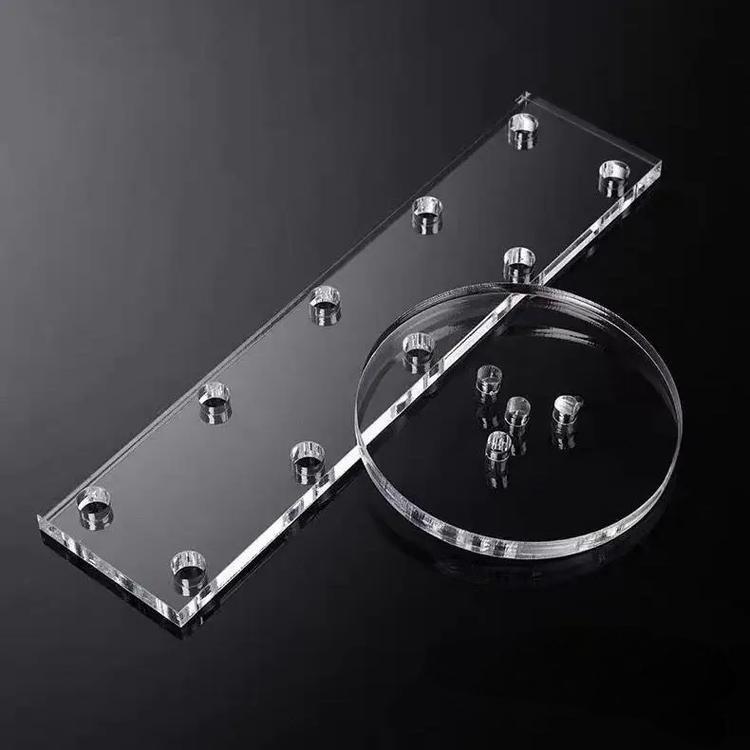
CNC works well for thick sheet and custom hole sizes. Laser cutting gives a cleaner and brighter edge on thinner sheets. For display parts and polished-looking details, this is often the better choice.
With a quality material like MASON® acrylic sheet, laser-cut holes and edges can look especially clean and bright.
How to avoid cracking
Most acrylic damage comes from too much force or poor support.
To reduce the risk:
- keep the protective film on
- support the sheet on a flat surface
- use sharp tools
- cut slowly, not aggressively
- do not press too hard at once
With thin acrylic sheet, patience matters more than force.
When not to do it by hand
Do not use hand methods if:
- the sheet is thick
- the hole must be very precise
- the part is customer-facing
- the edge finish matters
- you need repeat production
In those cases, a professional acrylic sheet supplier or fabrication shop will save time and reduce waste.

Final thoughts
So, how do you make a hole in acrylic sheet without a drill?
For thin acrylic sheet, you can use a knife, a hook knife, a heated metal tube, or a scoring method. These options work for simple jobs and small quantities. But for thicker material, cleaner holes, or production work, CNC or laser cutting is the better route.
The best method depends on the sheet, the hole size, and the finish you want.

Leave a Reply
Want to join the discussion?Feel free to contribute!